 VapeWholesaleHub
How to Read a Butterscotch Ice Certificate of Analysis — Warehouse Teams
The most expensive butterscotch ice mistake is not paying too much per unit. It is discovering after three months that the line cannot be reordered to the same standard. Consistency is the actual product.
Market Signals
The butterscotch ice category is consolidating around suppliers who can document what they ship. Buyers who built that requirement into their process early are now finding it much easier to scale.
Pricing and Margin
Tiered pricing works best when the tiers match real customer behaviour. Most butterscotch ice buyers will take the second tier if the step is modest and the third tier only if they can see a genuine reason to hold more stock.
Indicative reference points for planning purposes: entry tier from USD 1.33 per unit at 500 units, mid tier at USD 1.80, and volume tier at USD 1.23 for full container quantities. These figures move with specification, packaging and freight, so treat them as a shape rather than a quote.
Merchandising and Listing Tips
Keep the butterscotch ice range tidy. A half empty shelf reads as a dying line, and customers interpret it that way faster than any signage can correct.
How Butterscotch Ice Fits the Assortment
Category planning for butterscotch ice works best when you map it against three shopper types: the restocker who already knows what they want, the switcher who wants something stronger, and the explorer who buys on flavour name alone.
Butterscotch Ice rewards retailers who can explain it in one sentence. If your team needs a paragraph, the range is too complicated for the space it occupies.
Getting Butterscotch Ice to Your Warehouse
Customs classification for butterscotch ice varies by market and changes from time to time. We ship with full documentation, but your broker should confirm the current code before your first order rather than after it lands.
Reading a Butterscotch Ice Spec Sheet
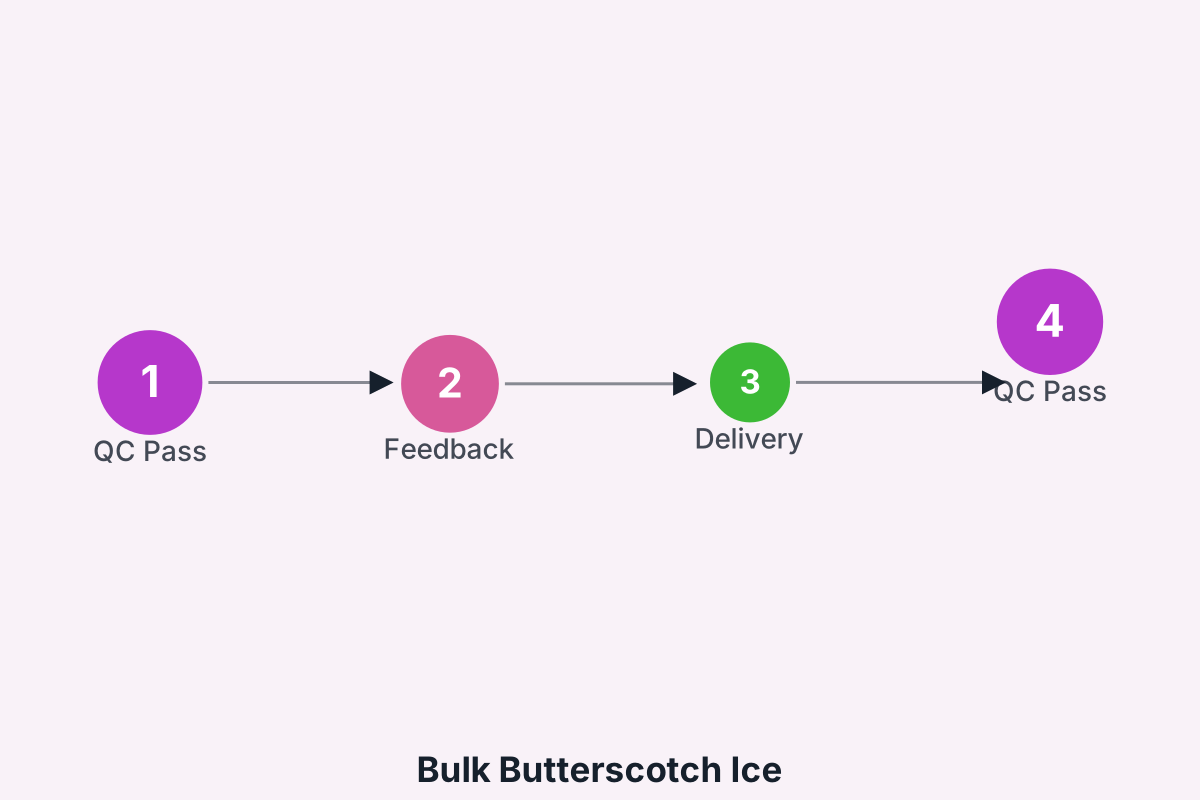
When we write a butterscotch ice specification with a distributor, we fix four things first: the resistance band, the liquid capacity tolerance, the puff count methodology and the packaging master carton. Everything else can flex without changing the customer experience.
| Product category | Refillable kit |
|---|---|
| Resistance band | 1.0 - 1.2 ohm |
| Capacity tolerance | +/- 5% |
| Puff count method | Declared by capacity |
| Master carton | 100 units |
| Carton weight | 7.8 kg |
| Shelf life | 24 months |
| Storage | 15-25 C, dry, away from direct light |
Practical Checklist
- Write the complaint threshold into the order terms.
- Agree the tolerance band in writing before approving artwork.
- Plan the switch from air to sea freight before you need it.
- Ask how the factory measures puff count, then compare like with like.
- Keep sealed retained samples from every production batch.
- Rotate stock by batch code rather than by delivery date.
Frequently Asked Questions
What if a batch does not match the sample?
Keep the retained samples from the approval stage. If a delivered batch measurably differs, we compare against the retained set and resolve it against the production record. This is why we insist on sealed retained units from every run.
How are price changes handled on repeat orders?
{K} pricing is reviewed against input costs and volume rather than adjusted casually. Any change is confirmed in writing before the next order is scheduled, with the reason stated so you can judge it yourself.
Can you match an existing product I already sell?
Often yes, provided we can measure it properly. Send a physical sample and we will report back on what can be matched, what will differ slightly, and why. An honest gap is more useful than a vague promise.
What happens if my market changes its rules?
Regulations move, and packaging or documentation sometimes has to follow. We keep approved artwork files on hand so that a required change is a reprint rather than a redesign, which keeps the cost and delay down.
How do you handle a short shipment?
Cartons are counted and weighed before dispatch and the figures are shared with you. If something is short on arrival, the packing record and the carrier documentation are both available, which keeps the claim straightforward.
Next Step
Whatever you decide, decide it against numbers you can check on arrival. That single discipline removes most of the risk from importing butterscotch ice.
Related Reading
- Butterscotch Ice Sell Through Tracking Without Expensive Tools — Southeast Asia
- Butterscotch Ice Benchmarking Two Factories Side by Side — Mixed Cabinets
- Butterscotch Ice Staff Training Notes for Store Teams — Latin America
- Butterscotch Ice Damage Claims and How to Avoid Them — Tight Margin Categories
- Butterscotch Ice Order Consolidation Across Suppliers — Wholesale Clubs
- Butterscotch Ice Shelf Life, Batch Codes and Traceability — Tight Margin Categories