 VapeWholesaleHub
Butterscotch Ice Specification Change Control — Retail Chains
The most expensive butterscotch ice mistake is not paying too much per unit. It is discovering after three months that the line cannot be reordered to the same standard. Consistency is the actual product.
Pricing and Margin
Build butterscotch ice price tiers around order sizes your customers actually place. Tiers that only make sense on a spreadsheet get ignored, and you end up discounting ad hoc instead.
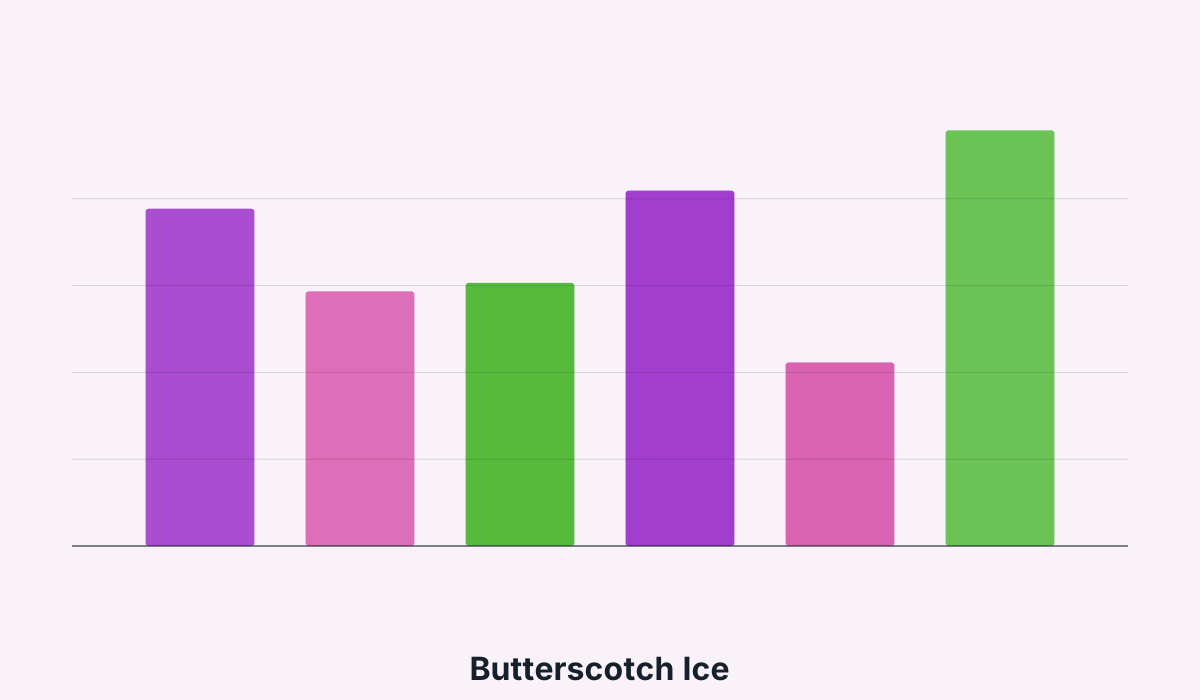
Indicative reference points for planning purposes: entry tier from USD 1.54 per unit at 500 units, mid tier at USD 1.55, and volume tier at USD 0.85 for full container quantities. These figures move with specification, packaging and freight, so treat them as a shape rather than a quote.
How Butterscotch Ice Fits the Assortment
Before anything else, decide which customer you are buying butterscotch ice for. A convenience counter with limited shelf depth needs a tight range that turns quickly, while a specialist shop can carry a deeper ladder of options and educate buyers into higher ticket lines.
Getting Butterscotch Ice to Your Warehouse
Customs classification for butterscotch ice varies by market and changes from time to time. We ship with full documentation, but your broker should confirm the current code before your first order rather than after it lands.
Consolidating butterscotch ice with other lines is often the biggest single saving available to a mid size importer. The unit cost does not change but the landed cost does, sometimes materially.
Turning Butterscotch Ice Into Repeats
Staff knowledge moves butterscotch ice more than any fixture. A two minute explanation of the difference between this line and the one next to it converts a browsing shopper into a repeat buyer far more reliably than a discount.
Use your butterscotch ice staff training time on the two questions customers actually ask. Anything more detailed gets forgotten by the second shift.
How Butterscotch Ice Batches Are Checked
Set the butterscotch ice complaint threshold in the contract before you need it. Deciding what counts as an acceptable defect rate during a dispute is the worst possible time to negotiate it.
The defect rate that matters is the one your customer experiences, not the one the factory reports. Bridge that gap by inspecting the way a customer would open the box, not the way a line worker packs it.
- Rotate stock by batch code rather than by delivery date.
- Start with a mixed carton and let your own sell-through decide.
- Check carton dimensions against your freight quote before confirming.
- Agree the tolerance band in writing before approving artwork.
- Keep sealed retained samples from every production batch.
Practical Checklist
- Rotate stock by batch code rather than by delivery date.
- Check carton dimensions against your freight quote before confirming.
- Keep sealed retained samples from every production batch.
- Write the complaint threshold into the order terms.
- Plan the switch from air to sea freight before you need it.
- Model landed cost, not ex-works price, when comparing quotes.
Frequently Asked Questions
Can I visit the production facility?
Yes, and we encourage it for larger programmes. Visits are most useful when you already have a draft specification, because you can then check the specific processes behind the numbers you care about.
What if a batch does not match the sample?
Keep the retained samples from the approval stage. If a delivered batch measurably differs, we compare against the retained set and resolve it against the production record. This is why we insist on sealed retained units from every run.
How do you handle a short shipment?
Cartons are counted and weighed before dispatch and the figures are shared with you. If something is short on arrival, the packing record and the carrier documentation are both available, which keeps the claim straightforward.
Do you hold stock for regular customers?
For established programmes we can reserve production slots and, in some cases, hold finished butterscotch ice stock against a forecast. It removes most of the lead time risk from a reorder and is worth discussing once volumes are stable.
What information do you need to quote?
Target specification, approximate quantity, destination and any packaging requirement. With those four we can usually come back with a costed option the same working day rather than a request for more information.
Next Step
Questions that are not answered here are usually the interesting ones. Reach out with the specifics of your market and we will answer with numbers rather than adjectives.
Related Reading
- Butterscotch Ice Distributor Onboarding Steps — Private Label Programmes
- Butterscotch Ice Cross Selling With Adjacent Categories — First-Time Importers
- Butterscotch Ice Auditing Your Own Supply Chain — Southeast Asia
- Butterscotch Ice Freight Options Compared: Air, Sea and Express — First-Time Importers
- Butterscotch Ice Counterfeit Risk and Serialisation — Oceania
- How to Store Butterscotch Ice Stock Without Losing Freshness — Convenience Retail