 VapeWholesaleHub
Butterscotch Ice Reorder Discipline for Busy Distributors — Cross-Border Trade
Buyers often ask us to explain why two butterscotch ice samples that look identical behave differently after a month. The answer is almost always tolerance control, and it is more interesting than it sounds.
Getting Butterscotch Ice to Your Warehouse
Model butterscotch ice freight both ways before choosing a method: cost per unit and cost per week of delay. The second figure is the one that decides whether a cheap option was actually cheap.
Carton dimensions for butterscotch ice are a design decision, not a packing afterthought. A few centimetres on the master carton can change how many units fit a pallet, and that repeats on every order.
Pricing and Margin
When you model butterscotch ice pricing, build in a realistic shrink figure. Even a well run line loses a small percentage to damage, expiry and sampling. Pretending that number is zero is how a healthy looking margin turns negative.
Compare butterscotch ice quotes on the same incoterm. A price that looks better because it excludes a cost you assumed was included is not a saving at all.
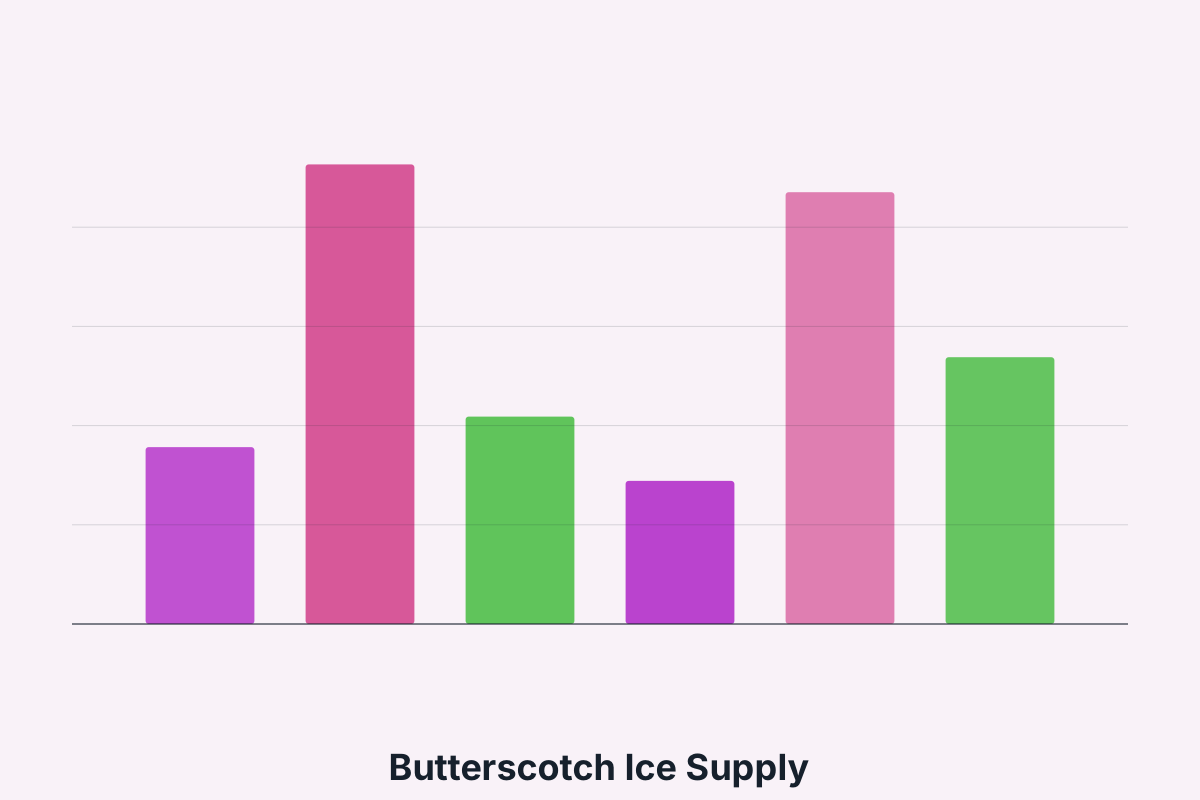
Indicative reference points for planning purposes: entry tier from USD 1.92 per unit at 500 units, mid tier at USD 1.01, and volume tier at USD 1.20 for full container quantities. These figures move with specification, packaging and freight, so treat them as a shape rather than a quote.
Turning Butterscotch Ice Into Repeats
Staff knowledge moves butterscotch ice more than any fixture. A two minute explanation of the difference between this line and the one next to it converts a browsing shopper into a repeat buyer far more reliably than a discount.
Bundle butterscotch ice with a complementary item rather than discounting it outright. The perceived value holds up better and the second item often becomes a repeat purchase on its own.
The Specification That Matters
Revisit the butterscotch ice specification after every third order. Small improvements compound, and factories take a buyer more seriously when the document has clearly been used.
Pay attention to how a butterscotch ice supplier responds when you ask for a tolerance they do not want to commit to. The hesitation is usually more informative than the eventual answer.
| Product category | Closed pod |
|---|---|
| Resistance band | 1.0 - 1.2 ohm |
| Capacity tolerance | +/- 2% |
| Puff count method | Machine cycle 3s on / 27s off |
| Master carton | 300 units |
| Carton weight | 5.3 kg |
| Shelf life | 18 months |
| Storage | 15-25 C, dry, away from direct light |
Quality Control in Practice
The cheapest quality control step is a retained sample. Keeping three sealed units from every butterscotch ice batch costs almost nothing and turns any dispute into a simple comparison instead of an argument over photographs.
- Agree the tolerance band in writing before approving artwork.
- Confirm the current customs classification with your own broker.
- Keep sealed retained samples from every production batch.
- Check carton dimensions against your freight quote before confirming.
- Plan the switch from air to sea freight before you need it.
Practical Checklist
- Confirm the current customs classification with your own broker.
- Agree the tolerance band in writing before approving artwork.
- Plan the switch from air to sea freight before you need it.
- Write the complaint threshold into the order terms.
- Check carton dimensions against your freight quote before confirming.
- Ask how the factory measures puff count, then compare like with like.
Frequently Asked Questions
Can you match an existing product I already sell?
Often yes, provided we can measure it properly. Send a physical sample and we will report back on what can be matched, what will differ slightly, and why. An honest gap is more useful than a vague promise.
What if a batch does not match the sample?
Keep the retained samples from the approval stage. If a delivered batch measurably differs, we compare against the retained set and resolve it against the production record. This is why we insist on sealed retained units from every run.
How do you handle a short shipment?
Cartons are counted and weighed before dispatch and the figures are shared with you. If something is short on arrival, the packing record and the carrier documentation are both available, which keeps the claim straightforward.
How long does a butterscotch ice order take to arrive?
Production typically takes ten to eighteen working days after artwork approval, and transit depends on the method you choose. Air express is fastest, sea freight is cheapest at volume. We confirm both at quotation so there is no surprise later.
What happens if my market changes its rules?
Regulations move, and packaging or documentation sometimes has to follow. We keep approved artwork files on hand so that a required change is a reprint rather than a redesign, which keeps the cost and delay down.
Next Step
We would rather quote you accurately and lose the order than quote optimistically and lose the relationship. Ask us the awkward questions early.
Related Reading
- Butterscotch Ice Tooling and Moulding Cost Structures — North America
- Butterscotch Ice Handling, Labeling and Regulatory Paperwork — EU Markets
- Butterscotch Ice Strengths Ladder for a Balanced Cabinet — New Distributors
- Butterscotch Ice Freight Options Compared: Air, Sea and Express — New Distributors
- Butterscotch Ice Working With a Local Compliance Partner — Plain Language
- How to Choose Butterscotch Ice Without Overpaying — Freight Included