 VapeWholesaleHub
Butterscotch Ice Quality Control: Tests We Run Before Dispatch — Real Numbers Only
If you are comparing butterscotch ice suppliers right now, you are probably looking at three quotes that look identical and cost very different amounts. That gap usually comes down to cell grade, coil consistency and how honest the factory is about tolerances. Let us unpack it.
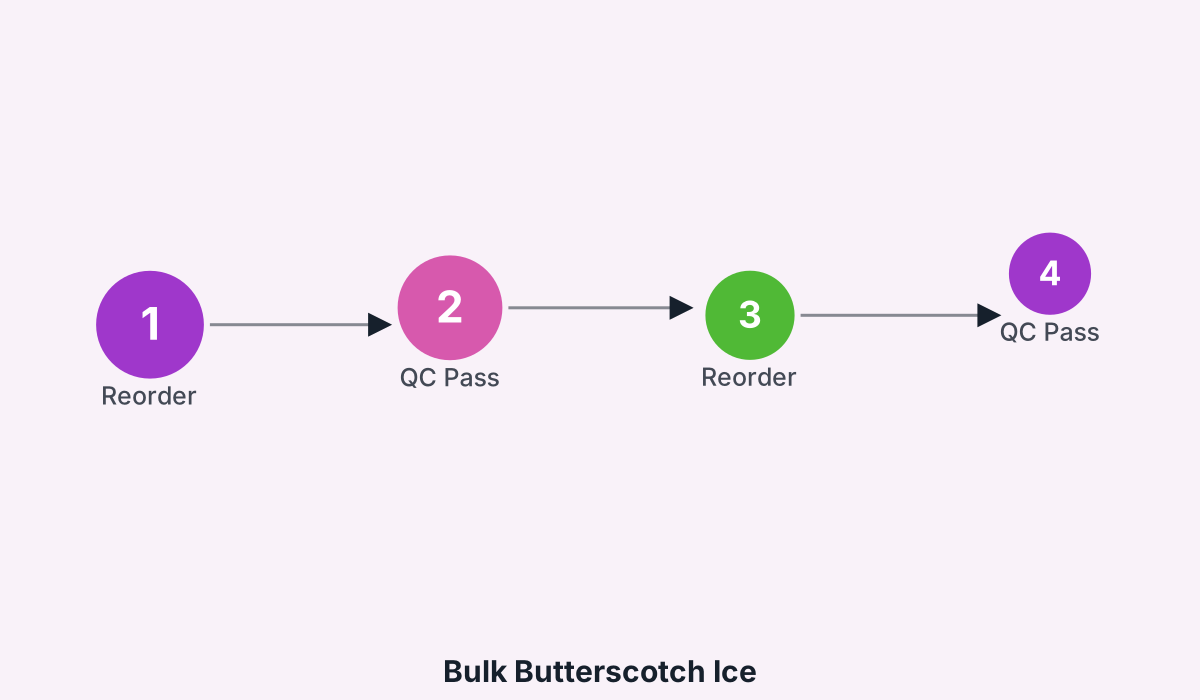
Selling Butterscotch Ice at Store Level
Keep the butterscotch ice range tidy. A half empty shelf reads as a dying line, and customers interpret it that way faster than any signage can correct.
On shelf, butterscotch ice sells on clarity. A plain shelf talker that states strength and flavour in two words outperforms a beautifully designed but vague display, because most purchase decisions here take under ten seconds.
Pricing and Margin
Compare butterscotch ice quotes on the same incoterm. A price that looks better because it excludes a cost you assumed was included is not a saving at all.
Build butterscotch ice price tiers around order sizes your customers actually place. Tiers that only make sense on a spreadsheet get ignored, and you end up discounting ad hoc instead.
Indicative reference points for planning purposes: entry tier from USD 1.48 per unit at 1000 units, mid tier at USD 1.02, and volume tier at USD 1.47 for full container quantities. These figures move with specification, packaging and freight, so treat them as a shape rather than a quote.
Market Signals
The butterscotch ice category is consolidating around suppliers who can document what they ship. Buyers who built that requirement into their process early are now finding it much easier to scale.
Assortment rationalisation is the quiet trend in this category. Shops that cut their butterscotch ice range from twelve lines to five well chosen ones often report higher total sales, not lower.
Getting Butterscotch Ice to Your Warehouse
Air freight makes sense for a first butterscotch ice order when you need to test demand quickly, but almost every steady programme moves to sea freight once volumes stabilise. Planning that switch early avoids a painful margin squeeze later.
Quality Control in Practice
The defect rate that matters is the one your customer experiences, not the one the factory reports. Bridge that gap by inspecting the way a customer would open the box, not the way a line worker packs it.
Keep a photo record of every butterscotch ice approval sample. Written descriptions age badly; a dated photograph next to a delivered unit settles most arguments in seconds.
- Keep sealed retained samples from every production batch.
- Confirm the current customs classification with your own broker.
- Plan the switch from air to sea freight before you need it.
- Check carton dimensions against your freight quote before confirming.
- Start with a mixed carton and let your own sell-through decide.
Positioning Butterscotch Ice on Your Shelf
Before anything else, decide which customer you are buying butterscotch ice for. A convenience counter with limited shelf depth needs a tight range that turns quickly, while a specialist shop can carry a deeper ladder of options and educate buyers into higher ticket lines.
Practical Checklist
- Model landed cost, not ex-works price, when comparing quotes.
- Plan the switch from air to sea freight before you need it.
- Ask how the factory measures puff count, then compare like with like.
- Write the complaint threshold into the order terms.
- Start with a mixed carton and let your own sell-through decide.
- Keep sealed retained samples from every production batch.
Frequently Asked Questions
How long does a butterscotch ice order take to arrive?
Production typically takes ten to eighteen working days after artwork approval, and transit depends on the method you choose. Air express is fastest, sea freight is cheapest at volume. We confirm both at quotation so there is no surprise later.
Is there support for in-store material?
Yes. Shelf talkers, counter cards and simple planogram suggestions are available for butterscotch ice ranges that reach a sensible volume. Most retailers find the plain strength and flavour cards do the most work.
How do you handle a short shipment?
Cartons are counted and weighed before dispatch and the figures are shared with you. If something is short on arrival, the packing record and the carrier documentation are both available, which keeps the claim straightforward.
What information do you need to quote?
Target specification, approximate quantity, destination and any packaging requirement. With those four we can usually come back with a costed option the same working day rather than a request for more information.
Next Step
Whatever you decide, decide it against numbers you can check on arrival. That single discipline removes most of the risk from importing butterscotch ice.
Related Reading
- Butterscotch Ice Cross Selling With Adjacent Categories — Established Chains
- Butterscotch Ice Safety Stock Levels for Import Programmes — Wholesale Clubs
- Butterscotch Ice Insurance and Cargo Cover Explained — Established Chains
- Butterscotch Ice Regulatory Change Monitoring — Private Label Programmes
- Butterscotch Ice Warehouse Picking and Batch Rotation — 2026 Buyer Notes
- How to Choose Butterscotch Ice Without Overpaying — Before Your Next Order