 VapeWholesaleHub
Butterscotch Ice Print Methods for Cartons and Labels — Landed Cost Worked Through
A butterscotch ice programme fails in predictable ways: a specification nobody wrote down, a sample nobody retained, and a lead time nobody stress tested. Here is how to close those three gaps before they cost you a container.
Logistics That Protect Margin
Ask your forwarder for the butterscotch ice transit history on your lane, not the advertised schedule. The gap between the two is the buffer you should build into your reorder point.
What Butterscotch Ice Really Costs Landed
Hold a small butterscotch ice buffer in your pricing model for currency movement. A few percent on a container is a real number, and it is easier to plan for than to absorb.
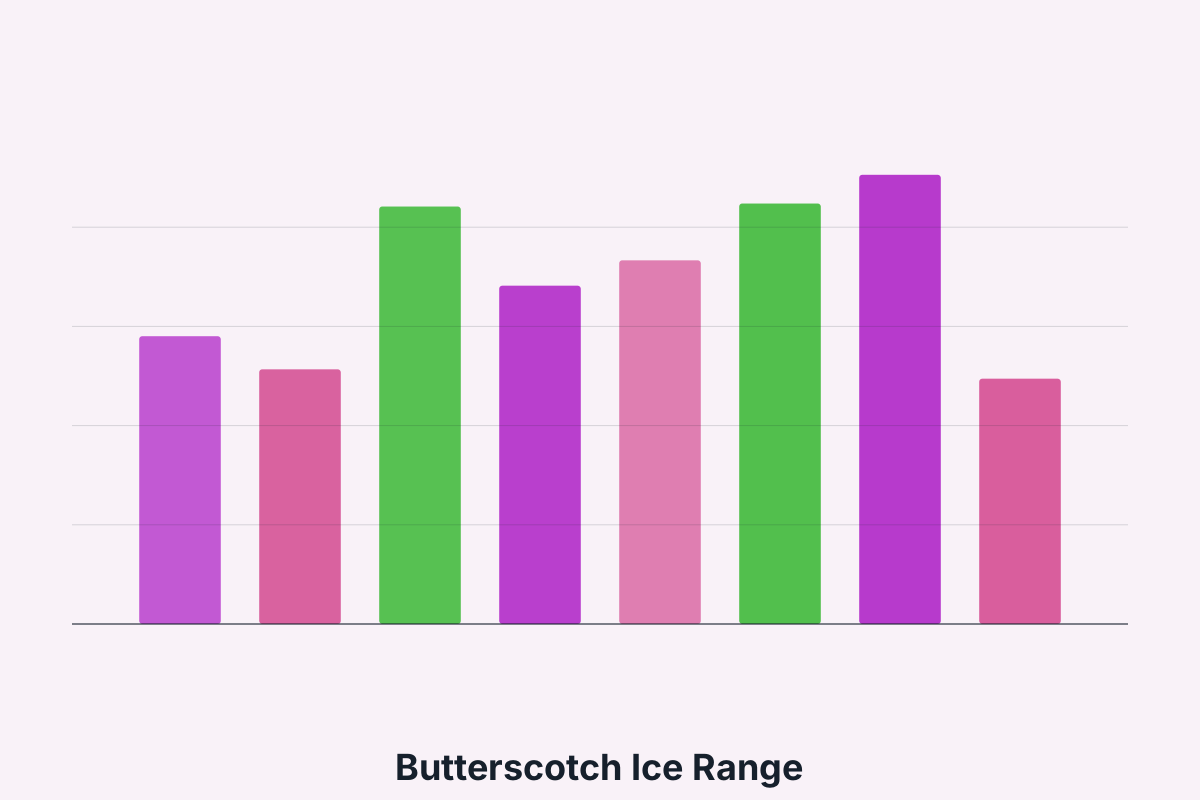
Indicative reference points for planning purposes: entry tier from USD 1.53 per unit at 500 units, mid tier at USD 1.30, and volume tier at USD 0.59 for full container quantities. These figures move with specification, packaging and freight, so treat them as a shape rather than a quote.
What to Fix Before Approving Butterscotch Ice
When we write a butterscotch ice specification with a distributor, we fix four things first: the resistance band, the liquid capacity tolerance, the puff count methodology and the packaging master carton. Everything else can flex without changing the customer experience.
Two specifications that matter more than buyers expect: the seal integrity after a drop test and the consistency of the draw from first use to last. Both are measurable before you commit to volume.
| Product category | Disposable |
|---|---|
| Resistance band | 0.6 - 0.8 ohm |
| Capacity tolerance | +/- 5% |
| Puff count method | Machine cycle 2s on / 18s off |
| Master carton | 120 units |
| Carton weight | 5.4 kg |
| Shelf life | 12 months |
| Storage | 15-25 C, dry, away from direct light |
Quality Control in Practice
Random checks are fine, but weight the sample towards the start and end of a butterscotch ice production run. Those are where a line is most likely to drift.
Keep a photo record of every butterscotch ice approval sample. Written descriptions age badly; a dated photograph next to a delivered unit settles most arguments in seconds.
- Model landed cost, not ex-works price, when comparing quotes.
- Agree the tolerance band in writing before approving artwork.
- Write the complaint threshold into the order terms.
- Rotate stock by batch code rather than by delivery date.
- Keep sealed retained samples from every production batch.
Turning Butterscotch Ice Into Repeats
Keep the butterscotch ice range tidy. A half empty shelf reads as a dying line, and customers interpret it that way faster than any signage can correct.
Where Butterscotch Ice Sits in the Range
Range decisions for butterscotch ice should start from shelf space, not from a supplier catalogue. Count the facings you actually have, then decide how many of them this line deserves against what it currently earns.
One useful exercise: list every butterscotch ice line you stock and mark the last date each one sold at full price. Anything without a recent full price sale is taking space from something that would use it better.
Practical Checklist
- Model landed cost, not ex-works price, when comparing quotes.
- Confirm the current customs classification with your own broker.
- Agree the tolerance band in writing before approving artwork.
- Plan the switch from air to sea freight before you need it.
- Keep sealed retained samples from every production batch.
- Rotate stock by batch code rather than by delivery date.
Frequently Asked Questions
What if I only need a small first order?
That is normal and sensible. A mixed carton lets you test butterscotch ice in your own market before committing to a production run, and the specification you approve at that stage carries through to larger orders unchanged.
Can I mix strengths in one order?
In most cases yes, as long as each strength meets the minimum run length. Mixed strength cartons are popular with retailers building their first display because they show the full ladder without over committing.
Do you hold stock for regular customers?
For established programmes we can reserve production slots and, in some cases, hold finished butterscotch ice stock against a forecast. It removes most of the lead time risk from a reorder and is worth discussing once volumes are stable.
How are price changes handled on repeat orders?
{K} pricing is reviewed against input costs and volume rather than adjusted casually. Any change is confirmed in writing before the next order is scheduled, with the reason stated so you can judge it yourself.
Next Step
The best butterscotch ice programmes we see are run by buyers who write things down. Specifications, batch records, complaint thresholds - the paperwork is the advantage.
Related Reading
- Butterscotch Ice Component Sourcing Behind the Finished Unit — Retail Chains
- Butterscotch Ice Loyalty Effects in Repeat Categories — Busy Buyers
- Butterscotch Ice Warranty Claims Workflow — Retail Chains
- Butterscotch Ice Benchmarking Two Factories Side by Side — Mixed Cabinets
- Butterscotch Ice Quality Drift: Catching It Before Customers Do — Established Chains
- Butterscotch Ice Transport Vibration and Pack Protection — Freight Included