 VapeWholesaleHub
Butterscotch Ice Lead Time Buffers That Actually Work — UK and Ireland
Buyers often ask us to explain why two butterscotch ice samples that look identical behave differently after a month. The answer is almost always tolerance control, and it is more interesting than it sounds.

Freight, Customs and Timing
Ask your forwarder for the butterscotch ice transit history on your lane, not the advertised schedule. The gap between the two is the buffer you should build into your reorder point.
Plan the butterscotch ice customs paperwork at the same time as the order, not when the goods are on the water. A missing document costs more in demurrage than the entire freight saving from a cheap forwarder.
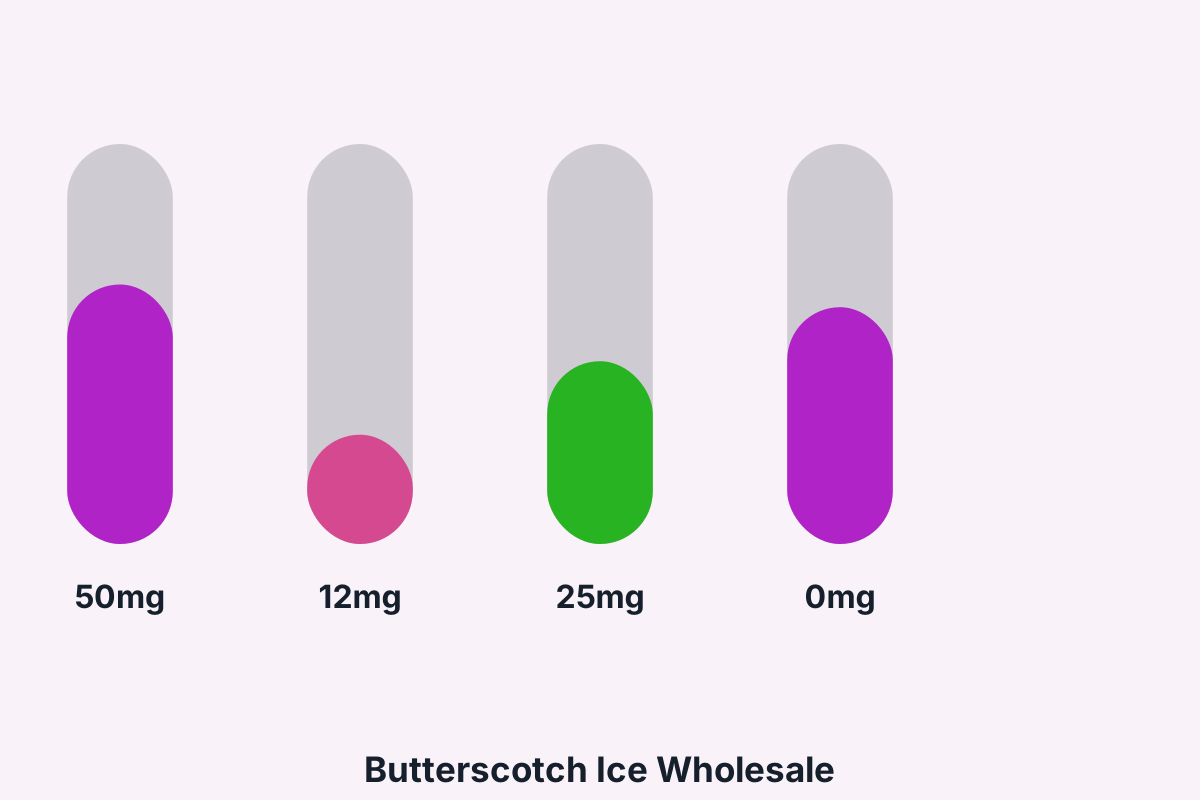
Where Butterscotch Ice Sits in the Range
Butterscotch Ice sits at an interesting point in the assortment. It is familiar enough to be an impulse purchase and specific enough to build a repeat pattern around. Treating it as either pure commodity or pure specialty both lead to poor results.
How Butterscotch Ice Batches Are Checked
The defect rate that matters is the one your customer experiences, not the one the factory reports. Bridge that gap by inspecting the way a customer would open the box, not the way a line worker packs it.
- Check carton dimensions against your freight quote before confirming.
- Ask how the factory measures puff count, then compare like with like.
- Keep sealed retained samples from every production batch.
- Write the complaint threshold into the order terms.
- Agree the tolerance band in writing before approving artwork.
Reading a Butterscotch Ice Spec Sheet
Specification sheets are where a butterscotch ice deal is won or quietly lost. Two samples can look and taste the same while using different coil wire, different wicking density and different tolerances on the mouthpiece. Those details decide how the unit behaves in week three rather than minute three.
Two specifications that matter more than buyers expect: the seal integrity after a drop test and the consistency of the draw from first use to last. Both are measurable before you commit to volume.
| Product category | Accessory |
|---|---|
| Resistance band | 1.2 - 1.4 ohm |
| Capacity tolerance | +/- 3% |
| Puff count method | Machine cycle 2s on / 18s off |
| Master carton | 240 units |
| Carton weight | 11.0 kg |
| Shelf life | 12 months |
| Storage | 15-25 C, dry, away from direct light |
Where Demand Is Heading
Traceability is moving from a nice-to-have to a requirement in several butterscotch ice markets. Building the habit now is cheaper than retrofitting record keeping under pressure later.
One visible change in butterscotch ice is the move towards clearer labelling and traceability. Retailers who adopted batch coding early are finding it much easier to work with larger distributors now.

Practical Checklist
- Ask how the factory measures puff count, then compare like with like.
- Plan the switch from air to sea freight before you need it.
- Model landed cost, not ex-works price, when comparing quotes.
- Start with a mixed carton and let your own sell-through decide.
- Confirm the current customs classification with your own broker.
- Agree the tolerance band in writing before approving artwork.
Frequently Asked Questions
What information do you need to quote?
Target specification, approximate quantity, destination and any packaging requirement. With those four we can usually come back with a costed option the same working day rather than a request for more information.
What if a batch does not match the sample?
Keep the retained samples from the approval stage. If a delivered batch measurably differs, we compare against the retained set and resolve it against the production record. This is why we insist on sealed retained units from every run.
How are price changes handled on repeat orders?
{K} pricing is reviewed against input costs and volume rather than adjusted casually. Any change is confirmed in writing before the next order is scheduled, with the reason stated so you can judge it yourself.
Is there support for in-store material?
Yes. Shelf talkers, counter cards and simple planogram suggestions are available for butterscotch ice ranges that reach a sensible volume. Most retailers find the plain strength and flavour cards do the most work.
Next Step
Nobody wins when a first order is too large to learn from. Start with a mixed carton, check how it moves in your own market, then scale the lines that earned the shelf space.
Related Reading
- Butterscotch Ice Flavour Development: From Brief to Production — Before Your Next Order
- Spotting Defects in Butterscotch Ice Before Shipment — Repeat Orders
- Butterscotch Ice Warranty and After Sales: Setting Expectations — 2026 Buyer Notes
- Butterscotch Ice Product Photography for Listings — 2026 Buyer Notes
- Butterscotch Ice Product Listings That Actually Convert — Cross-Border Trade
- Butterscotch Ice Chargeback Prevention for Retail Partners — Specialist Vape Shops