 VapeWholesaleHub
Butterscotch Ice Last Mile Delivery for Local Retailers — Container-Scale Orders
We ship butterscotch ice to distributors in very different markets, and the same five questions come up almost every week. Rather than answer them in email each time, we have written them out properly here.

Turning Butterscotch Ice Into Repeats
Staff knowledge moves butterscotch ice more than any fixture. A two minute explanation of the difference between this line and the one next to it converts a browsing shopper into a repeat buyer far more reliably than a discount.
On shelf, butterscotch ice sells on clarity. A plain shelf talker that states strength and flavour in two words outperforms a beautifully designed but vague display, because most purchase decisions here take under ten seconds.
Freight, Customs and Timing
Split butterscotch ice shipments across two sailings when the order is large enough. It costs slightly more but removes the risk of a single event wiping out a full quarter of stock.
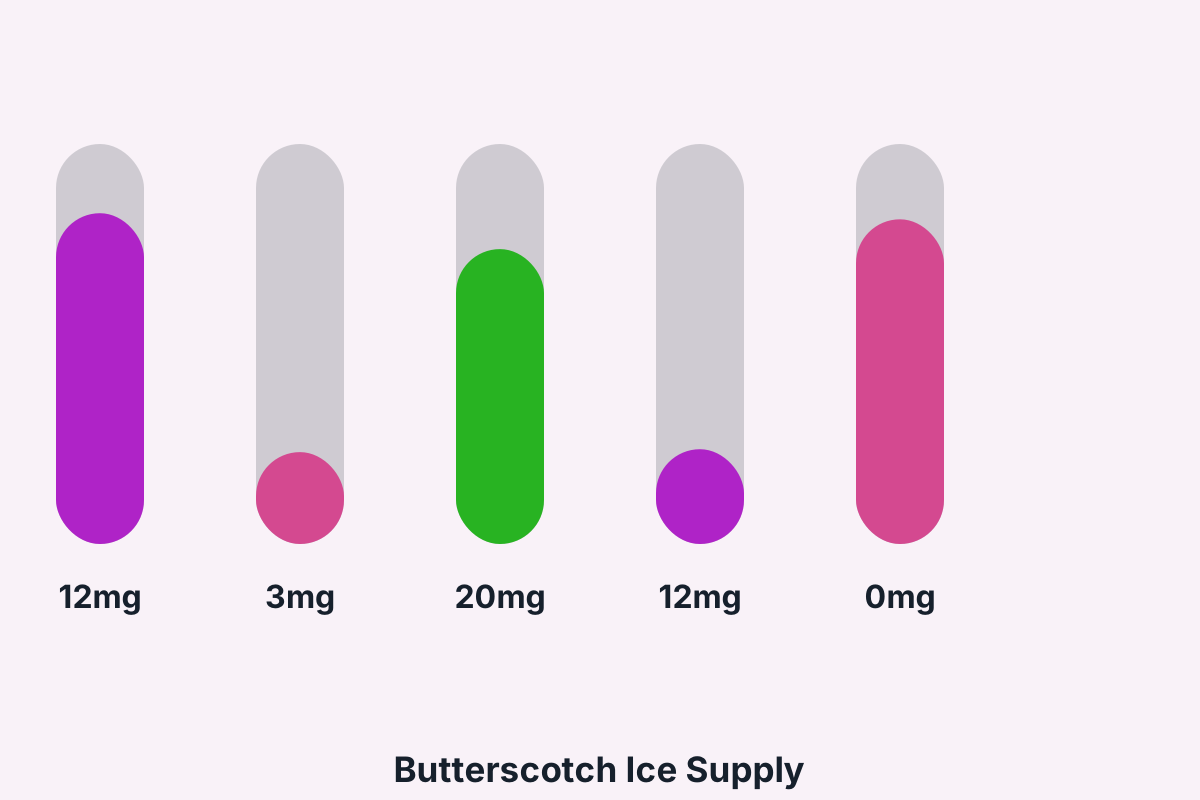
Where Butterscotch Ice Sits in the Range
Butterscotch Ice rewards retailers who can explain it in one sentence. If your team needs a paragraph, the range is too complicated for the space it occupies.
One useful exercise: list every butterscotch ice line you stock and mark the last date each one sold at full price. Anything without a recent full price sale is taking space from something that would use it better.
Pricing and Margin
The cheapest butterscotch ice quote is rarely the cheapest outcome. Add freight, defect handling, delay risk and the staff time spent chasing, then compare again. The ranking often changes.
Indicative reference points for planning purposes: entry tier from USD 0.98 per unit at 500 units, mid tier at USD 0.95, and volume tier at USD 0.55 for full container quantities. These figures move with specification, packaging and freight, so treat them as a shape rather than a quote.
Reading a Butterscotch Ice Spec Sheet
Where possible, tie part of the butterscotch ice payment to inspection against the written spec. It focuses attention on the numbers rather than on the relationship.
Where possible, tie part of the butterscotch ice payment to inspection against the written spec. It focuses attention on the numbers rather than on the relationship.
| Product category | Disposable |
|---|---|
| Resistance band | 0.8 - 1.0 ohm |
| Capacity tolerance | +/- 5% |
| Puff count method | Machine cycle 2s on / 18s off |
| Master carton | 120 units |
| Carton weight | 8.4 kg |
| Shelf life | 18 months |
| Storage | 15-25 C, dry, away from direct light |
How Butterscotch Ice Batches Are Checked
Incoming inspection for butterscotch ice is not about opening boxes at random. We weigh a sample of cartons, check batch codes against the production record, run a draw resistance measurement, and log the results so that a complaint three months later can be traced to a specific run.
- Plan the switch from air to sea freight before you need it.
- Model landed cost, not ex-works price, when comparing quotes.
- Ask how the factory measures puff count, then compare like with like.
- Check carton dimensions against your freight quote before confirming.
- Rotate stock by batch code rather than by delivery date.
Practical Checklist
- Keep sealed retained samples from every production batch.
- Agree the tolerance band in writing before approving artwork.
- Ask how the factory measures puff count, then compare like with like.
- Start with a mixed carton and let your own sell-through decide.
- Check carton dimensions against your freight quote before confirming.
- Rotate stock by batch code rather than by delivery date.
Frequently Asked Questions
What if I only need a small first order?
That is normal and sensible. A mixed carton lets you test butterscotch ice in your own market before committing to a production run, and the specification you approve at that stage carries through to larger orders unchanged.
Can you match an existing product I already sell?
Often yes, provided we can measure it properly. Send a physical sample and we will report back on what can be matched, what will differ slightly, and why. An honest gap is more useful than a vague promise.
What information do you need to quote?
Target specification, approximate quantity, destination and any packaging requirement. With those four we can usually come back with a costed option the same working day rather than a request for more information.
How do you handle a short shipment?
Cartons are counted and weighed before dispatch and the figures are shared with you. If something is short on arrival, the packing record and the carrier documentation are both available, which keeps the claim straightforward.
Next Step
Questions that are not answered here are usually the interesting ones. Reach out with the specifics of your market and we will answer with numbers rather than adjectives.
Related Reading
- Building a Butterscotch Ice Catalogue Your Sales Team Can Use — Container-Scale Orders
- Butterscotch Ice Artwork and Dieline Essentials — Step by Step
- Butterscotch Ice Documentation Pack for Customs Brokers — a Printable Checklist
- Butterscotch Ice Tolerance Bands That Hold Up in Production — Retail Chains
- Butterscotch Ice Order Consolidation Across Suppliers — Wholesale Clubs
- Butterscotch Ice Handling, Labeling and Regulatory Paperwork — 2026 Edition