 VapeWholesaleHub
Butterscotch Ice Inventory Turnover Benchmarks for Stores — Retail Chains
Everything below applies whether you are ordering one mixed carton or a full container. The numbers scale, but the logic does not change, which is the point of writing it down once.
Inspection Before Dispatch
Random checks are fine, but weight the sample towards the start and end of a butterscotch ice production run. Those are where a line is most likely to drift.
- Rotate stock by batch code rather than by delivery date.
- Agree the tolerance band in writing before approving artwork.
- Model landed cost, not ex-works price, when comparing quotes.
- Check carton dimensions against your freight quote before confirming.
- Confirm the current customs classification with your own broker.
Logistics That Protect Margin
Split butterscotch ice shipments across two sailings when the order is large enough. It costs slightly more but removes the risk of a single event wiping out a full quarter of stock.
Customs classification for butterscotch ice varies by market and changes from time to time. We ship with full documentation, but your broker should confirm the current code before your first order rather than after it lands.
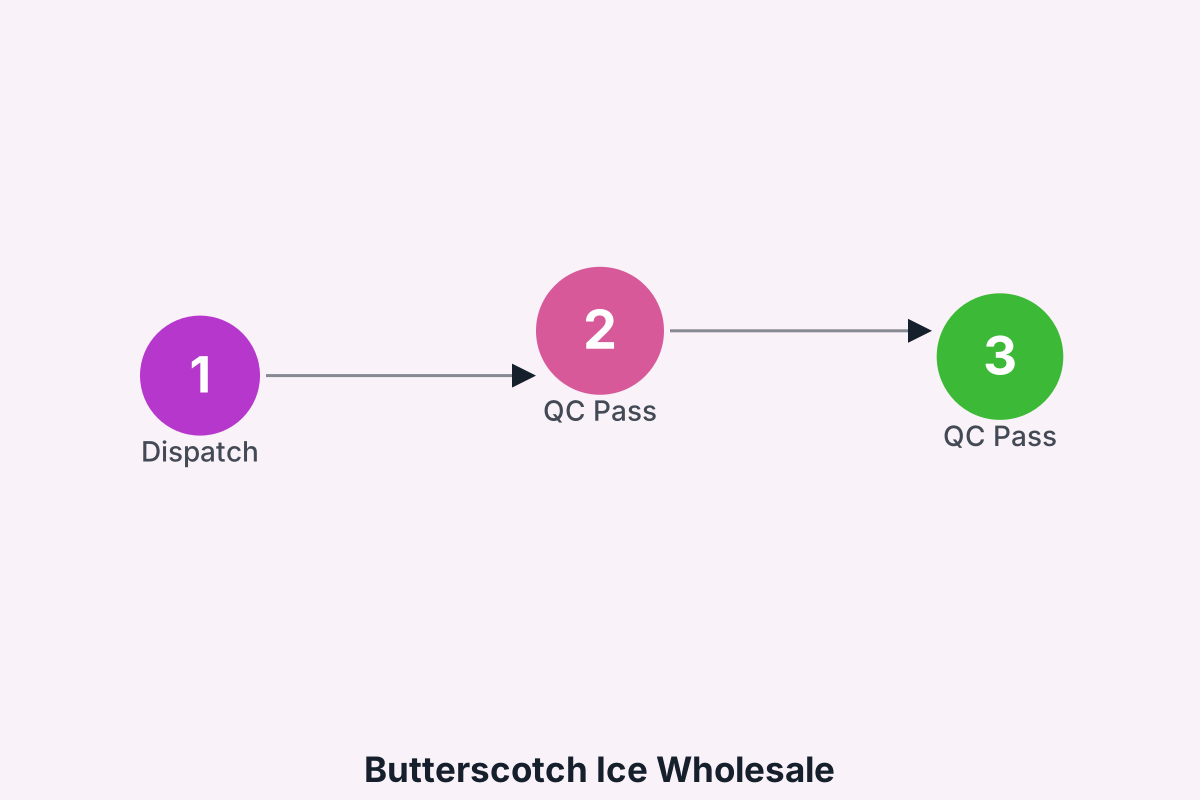
Trends Worth Watching
The butterscotch ice category is consolidating around suppliers who can document what they ship. Buyers who built that requirement into their process early are now finding it much easier to scale.
One visible change in butterscotch ice is the move towards clearer labelling and traceability. Retailers who adopted batch coding early are finding it much easier to work with larger distributors now.
How Butterscotch Ice Fits the Assortment
Category data for butterscotch ice is noisier than it looks. Promotions, weather and local competition all move weekly numbers, so read three months at a time rather than reacting to a single week.
Think about where butterscotch ice sits in your customer's week. If it is a weekly restock, breadth matters less than availability. If it is an occasional treat, flavour range and display story carry more weight.
Pricing and Margin
When you model butterscotch ice pricing, build in a realistic shrink figure. Even a well run line loses a small percentage to damage, expiry and sampling. Pretending that number is zero is how a healthy looking margin turns negative.
Margin on butterscotch ice is rarely lost at the till. It is lost through dead stock, returns and emergency air freight. A slightly higher landed cost with predictable lead time usually beats the cheapest quote on the spreadsheet.
Indicative reference points for planning purposes: entry tier from USD 2.03 per unit at 2000 units, mid tier at USD 1.40, and volume tier at USD 1.05 for full container quantities. These figures move with specification, packaging and freight, so treat them as a shape rather than a quote.
Practical Checklist
- Plan the switch from air to sea freight before you need it.
- Start with a mixed carton and let your own sell-through decide.
- Keep sealed retained samples from every production batch.
- Agree the tolerance band in writing before approving artwork.
- Write the complaint threshold into the order terms.
- Rotate stock by batch code rather than by delivery date.
Frequently Asked Questions
Is there support for in-store material?
Yes. Shelf talkers, counter cards and simple planogram suggestions are available for butterscotch ice ranges that reach a sensible volume. Most retailers find the plain strength and flavour cards do the most work.
How do you handle a short shipment?
Cartons are counted and weighed before dispatch and the figures are shared with you. If something is short on arrival, the packing record and the carrier documentation are both available, which keeps the claim straightforward.
Do you hold stock for regular customers?
For established programmes we can reserve production slots and, in some cases, hold finished butterscotch ice stock against a forecast. It removes most of the lead time risk from a reorder and is worth discussing once volumes are stable.
What if I only need a small first order?
That is normal and sensible. A mixed carton lets you test butterscotch ice in your own market before committing to a production run, and the specification you approve at that stage carries through to larger orders unchanged.
What if a batch does not match the sample?
Keep the retained samples from the approval stage. If a delivered batch measurably differs, we compare against the retained set and resolve it against the production record. This is why we insist on sealed retained units from every run.
Next Step
Nobody wins when a first order is too large to learn from. Start with a mixed carton, check how it moves in your own market, then scale the lines that earned the shelf space.
Related Reading
- Pricing Butterscotch Ice for Healthy Retail Margins — New Distributors
- Butterscotch Ice Inventory Turnover Benchmarks for Stores — the Middle East
- Butterscotch Ice Contract Clauses Worth Negotiating — First-Time Importers
- Butterscotch Ice Copy That Answers Buyer Objections — Real Numbers Only
- Butterscotch Ice Monthly Review Ritual for Buyers — Private Label Programmes
- Butterscotch Ice Counterfeit Risk and Serialisation — Tight Margin Categories