 VapeWholesaleHub
Butterscotch Ice First Order Playbook for New Importers — Cross-Border Trade
A butterscotch ice programme fails in predictable ways: a specification nobody wrote down, a sample nobody retained, and a lead time nobody stress tested. Here is how to close those three gaps before they cost you a container.
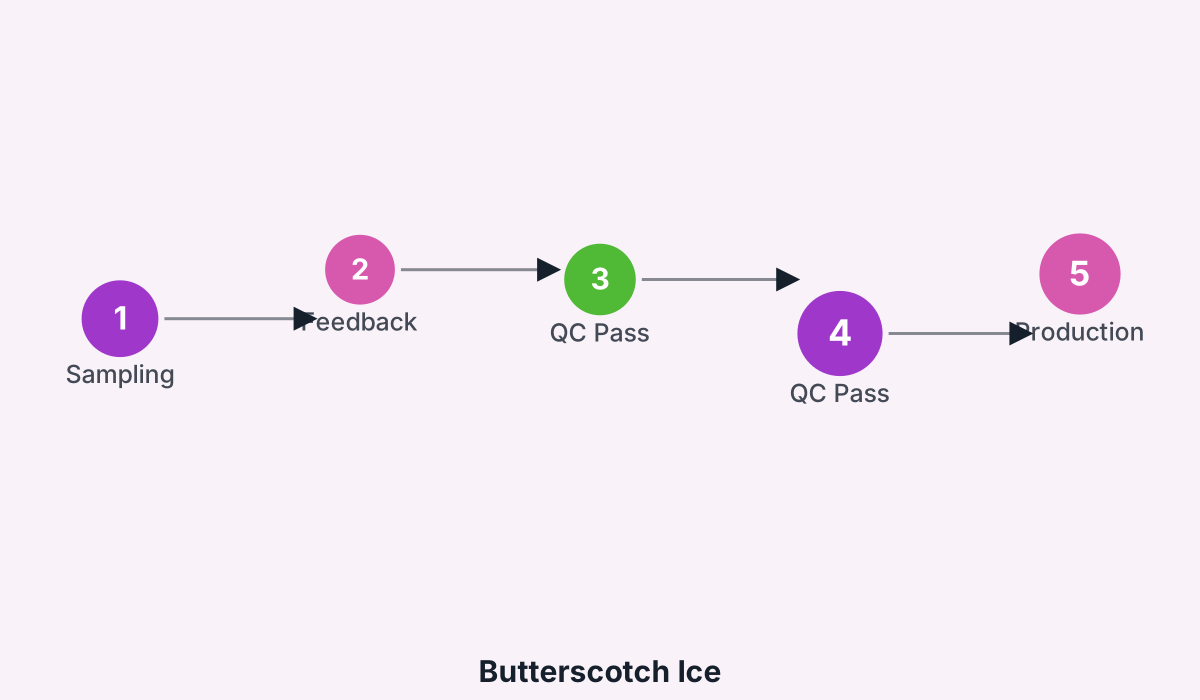
Freight, Customs and Timing
Carton dimensions for butterscotch ice are a design decision, not a packing afterthought. A few centimetres on the master carton can change how many units fit a pallet, and that repeats on every order.
How Butterscotch Ice Fits the Assortment
Category planning for butterscotch ice works best when you map it against three shopper types: the restocker who already knows what they want, the switcher who wants something stronger, and the explorer who buys on flavour name alone.
The Specification That Matters
Good butterscotch ice specs describe the failure boundaries, not just the target. Stating what is unacceptable gives the factory a clear production window instead of a single point they will miss half the time.
Good butterscotch ice specs describe the failure boundaries, not just the target. Stating what is unacceptable gives the factory a clear production window instead of a single point they will miss half the time.
| Product category | Disposable |
|---|---|
| Resistance band | 1.2 - 1.4 ohm |
| Capacity tolerance | +/- 5% |
| Puff count method | Machine cycle 3s on / 27s off |
| Master carton | 400 units |
| Carton weight | 11.1 kg |
| Shelf life | 12 months |
| Storage | 15-25 C, dry, away from direct light |
Quality Control in Practice
Incoming inspection for butterscotch ice is not about opening boxes at random. We weigh a sample of cartons, check batch codes against the production record, run a draw resistance measurement, and log the results so that a complaint three months later can be traced to a specific run.
Inspection is only useful if the result is recorded somewhere you can find it later. A butterscotch ice batch log with weights, codes and measurements turns a future complaint into a five minute lookup.
- Model landed cost, not ex-works price, when comparing quotes.
- Ask how the factory measures puff count, then compare like with like.
- Agree the tolerance band in writing before approving artwork.
- Keep sealed retained samples from every production batch.
- Confirm the current customs classification with your own broker.
Market Signals
Demand for butterscotch ice has been steadily rebalancing. The early phase rewarded whoever could ship fastest; the current phase rewards whoever can ship the same thing twice. That shift favours buyers who invest in specification rather than price shopping.
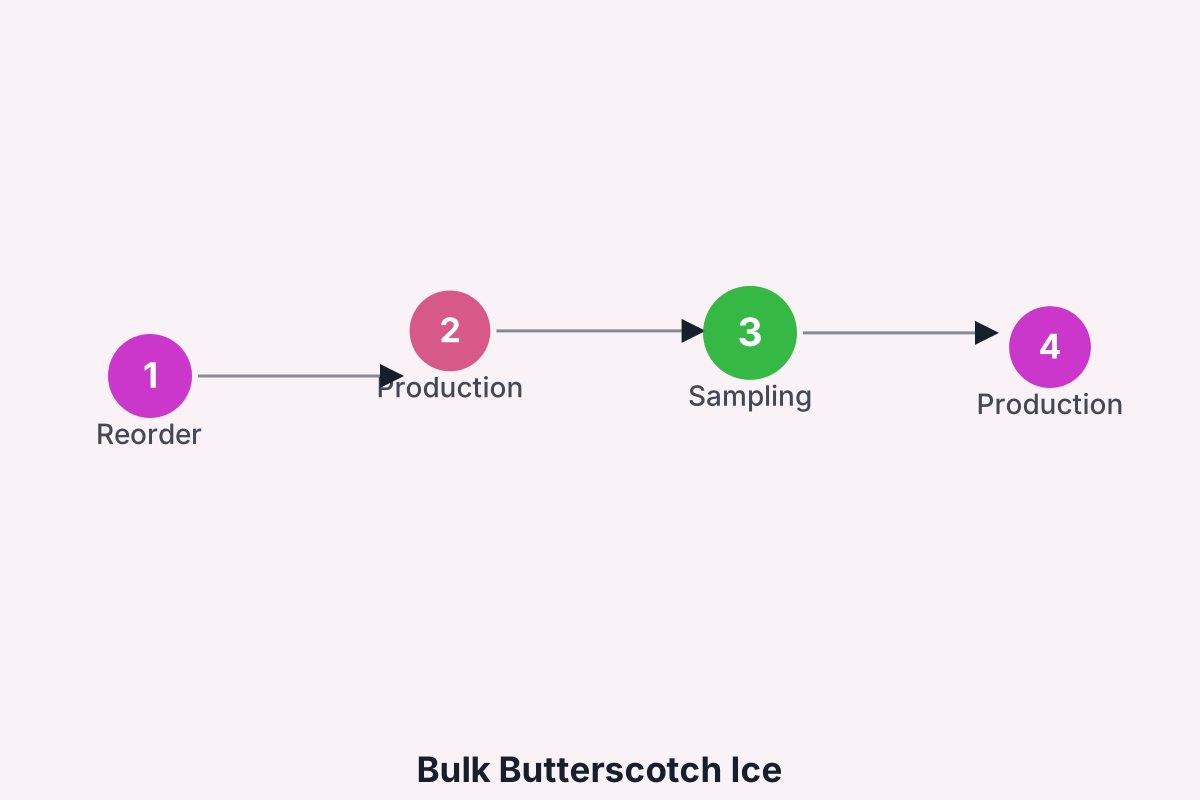
Pricing and Margin
Watch the butterscotch ice price you pay over a year rather than per order. Factories respond well to visible volume, and a quarterly review is usually worth more than a hard negotiation each time.
Compare butterscotch ice quotes on the same incoterm. A price that looks better because it excludes a cost you assumed was included is not a saving at all.
Indicative reference points for planning purposes: entry tier from USD 1.47 per unit at 2000 units, mid tier at USD 1.43, and volume tier at USD 1.08 for full container quantities. These figures move with specification, packaging and freight, so treat them as a shape rather than a quote.
Practical Checklist
- Start with a mixed carton and let your own sell-through decide.
- Write the complaint threshold into the order terms.
- Model landed cost, not ex-works price, when comparing quotes.
- Ask how the factory measures puff count, then compare like with like.
- Rotate stock by batch code rather than by delivery date.
- Check carton dimensions against your freight quote before confirming.
Frequently Asked Questions
What happens if my market changes its rules?
Regulations move, and packaging or documentation sometimes has to follow. We keep approved artwork files on hand so that a required change is a reprint rather than a redesign, which keeps the cost and delay down.
Can I mix strengths in one order?
In most cases yes, as long as each strength meets the minimum run length. Mixed strength cartons are popular with retailers building their first display because they show the full ladder without over committing.
How are price changes handled on repeat orders?
{K} pricing is reviewed against input costs and volume rather than adjusted casually. Any change is confirmed in writing before the next order is scheduled, with the reason stated so you can judge it yourself.
Is there support for in-store material?
Yes. Shelf talkers, counter cards and simple planogram suggestions are available for butterscotch ice ranges that reach a sensible volume. Most retailers find the plain strength and flavour cards do the most work.
Next Step
Send us your current butterscotch ice specification even if you are not planning to move suppliers. A second read of a document you use every month is usually worth the ten minutes.
Related Reading
- Seasonal Planning for Butterscotch Ice Inventory — Three Price Tiers
- Butterscotch Ice First Order Playbook for New Importers — First-Time Importers
- How Butterscotch Ice Performs in Different Climate Conditions — Tight Margin Categories
- Butterscotch Ice Batch Recall Traceability in Practice — Regional Distributors
- Butterscotch Ice Supplier Scorecard Template — Real Numbers Only
- Butterscotch Ice Handling, Labeling and Regulatory Paperwork — Established Chains