 VapeWholesaleHub
Butterscotch Ice Factory Visit Preparation Checklist — Cross-Border Trade
Buying butterscotch ice wholesale is a logistics problem disguised as a product problem. The unit is small, the margin depends on freight density, and the failure mode shows up weeks after delivery. The notes below come from real orders we have shipped.
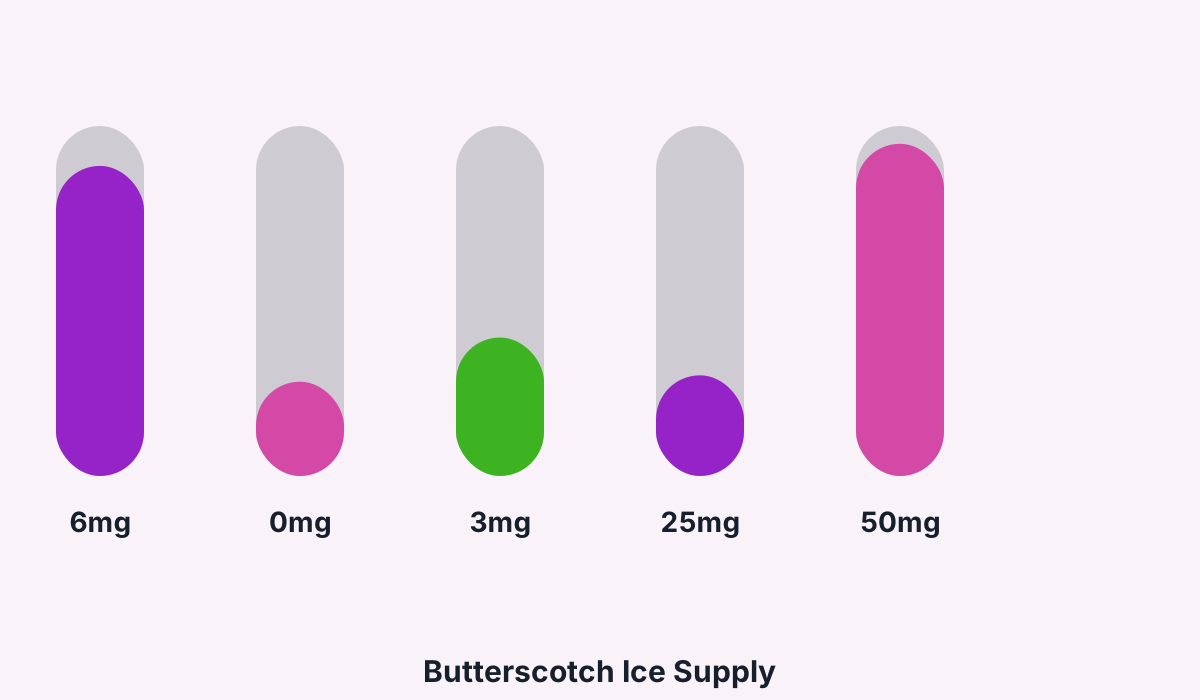
Merchandising and Listing Tips
On shelf, butterscotch ice sells on clarity. A plain shelf talker that states strength and flavour in two words outperforms a beautifully designed but vague display, because most purchase decisions here take under ten seconds.
Logistics That Protect Margin
Ask your forwarder for the butterscotch ice transit history on your lane, not the advertised schedule. The gap between the two is the buffer you should build into your reorder point.

Reading a Butterscotch Ice Spec Sheet
Two specifications that matter more than buyers expect: the seal integrity after a drop test and the consistency of the draw from first use to last. Both are measurable before you commit to volume.
When we write a butterscotch ice specification with a distributor, we fix four things first: the resistance band, the liquid capacity tolerance, the puff count methodology and the packaging master carton. Everything else can flex without changing the customer experience.
| Product category | Open system |
|---|---|
| Resistance band | 0.8 - 1.0 ohm |
| Capacity tolerance | +/- 2% |
| Puff count method | Declared by capacity |
| Master carton | 120 units |
| Carton weight | 4.5 kg |
| Shelf life | 18 months |
| Storage | 15-25 C, dry, away from direct light |
Inspection Before Dispatch
Most defects in butterscotch ice are not dramatic. They are loose tolerances, a slightly thin seal, a mouthpiece that clicks. Left alone they turn into leak complaints, which are the single most common reason a retailer drops a line.
AQL sampling gets a lot of attention, but for butterscotch ice the more useful habit is simply measuring the same three things on every single batch. Trend lines catch problems that pass/fail checks miss.
- Write the complaint threshold into the order terms.
- Ask how the factory measures puff count, then compare like with like.
- Model landed cost, not ex-works price, when comparing quotes.
- Confirm the current customs classification with your own broker.
- Agree the tolerance band in writing before approving artwork.
How Butterscotch Ice Fits the Assortment
One useful exercise: list every butterscotch ice line you stock and mark the last date each one sold at full price. Anything without a recent full price sale is taking space from something that would use it better.
Think about where butterscotch ice sits in your customer's week. If it is a weekly restock, breadth matters less than availability. If it is an occasional treat, flavour range and display story carry more weight.
Modelling a Healthy Margin
Watch the butterscotch ice price you pay over a year rather than per order. Factories respond well to visible volume, and a quarterly review is usually worth more than a hard negotiation each time.
Discounting butterscotch ice to win shelf space tends to reset customer expectations permanently. Volume support in kind, such as display material, usually costs less in the long run.
Indicative reference points for planning purposes: entry tier from USD 2.09 per unit at 500 units, mid tier at USD 1.20, and volume tier at USD 0.98 for full container quantities. These figures move with specification, packaging and freight, so treat them as a shape rather than a quote.
Practical Checklist
- Keep sealed retained samples from every production batch.
- Ask how the factory measures puff count, then compare like with like.
- Start with a mixed carton and let your own sell-through decide.
- Model landed cost, not ex-works price, when comparing quotes.
- Check carton dimensions against your freight quote before confirming.
- Write the complaint threshold into the order terms.
Frequently Asked Questions
How do you handle a short shipment?
Cartons are counted and weighed before dispatch and the figures are shared with you. If something is short on arrival, the packing record and the carrier documentation are both available, which keeps the claim straightforward.
Can I mix strengths in one order?
In most cases yes, as long as each strength meets the minimum run length. Mixed strength cartons are popular with retailers building their first display because they show the full ladder without over committing.
Do you hold stock for regular customers?
For established programmes we can reserve production slots and, in some cases, hold finished butterscotch ice stock against a forecast. It removes most of the lead time risk from a reorder and is worth discussing once volumes are stable.
What if a batch does not match the sample?
Keep the retained samples from the approval stage. If a delivered batch measurably differs, we compare against the retained set and resolve it against the production record. This is why we insist on sealed retained units from every run.
Next Step
Questions that are not answered here are usually the interesting ones. Reach out with the specifics of your market and we will answer with numbers rather than adjectives.
Related Reading
- Butterscotch Ice Display Ideas for Small Counters — UK and Ireland
- Merchandising Butterscotch Ice Inside a Physical Store — Oceania
- Butterscotch Ice Competitor Range Teardown — a Factory Floor View
- Butterscotch Ice Promotional Mechanics That Do Not Erode Value — Small Batch Buyers
- Butterscotch Ice First Order Playbook for New Importers — Online Sellers
- Butterscotch Ice Escalation Path When Something Goes Wrong — Convenience Retail