 VapeWholesaleHub
Butterscotch Ice Emissions and Leak Testing Methods — Wholesale Clubs
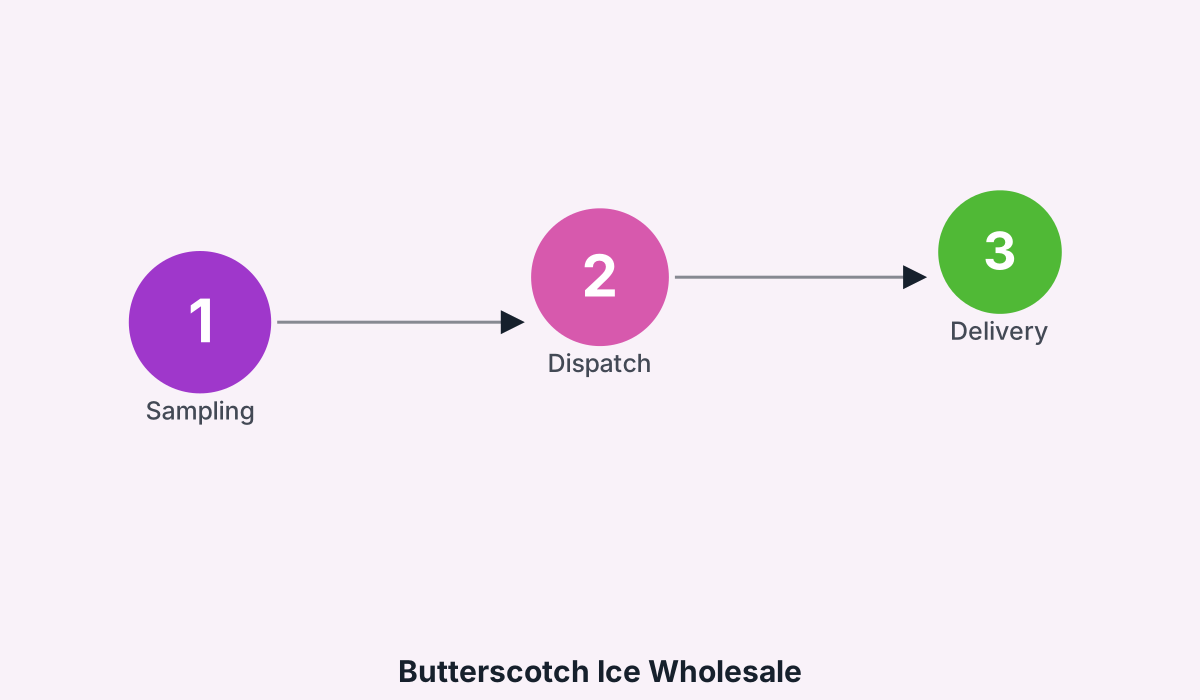
Buying butterscotch ice wholesale is a logistics problem disguised as a product problem. The unit is small, the margin depends on freight density, and the failure mode shows up weeks after delivery. The notes below come from real orders we have shipped.
Market Signals
One shift worth planning for: shorter butterscotch ice reorder cycles with smaller average drops. It favours suppliers with flexible production slots over those who only want large annual commitments.
Turning Butterscotch Ice Into Repeats
A butterscotch ice display that answers strength and flavour without staff involvement outsells a prettier one that does not. Most customers will not ask, so the fixture has to do the work.
Logistics That Protect Margin
Air freight makes sense for a first butterscotch ice order when you need to test demand quickly, but almost every steady programme moves to sea freight once volumes stabilise. Planning that switch early avoids a painful margin squeeze later.
Ask your forwarder for the butterscotch ice transit history on your lane, not the advertised schedule. The gap between the two is the buffer you should build into your reorder point.
The Specification That Matters
Two specifications that matter more than buyers expect: the seal integrity after a drop test and the consistency of the draw from first use to last. Both are measurable before you commit to volume.
| Product category | Pod system |
|---|---|
| Resistance band | 0.8 - 1.0 ohm |
| Capacity tolerance | +/- 5% |
| Puff count method | Machine cycle 3s on / 27s off |
| Master carton | 240 units |
| Carton weight | 12.4 kg |
| Shelf life | 12 months |
| Storage | 15-25 C, dry, away from direct light |
Modelling a Healthy Margin
Margin on butterscotch ice is rarely lost at the till. It is lost through dead stock, returns and emergency air freight. A slightly higher landed cost with predictable lead time usually beats the cheapest quote on the spreadsheet.
Indicative reference points for planning purposes: entry tier from USD 2.23 per unit at 500 units, mid tier at USD 1.81, and volume tier at USD 0.69 for full container quantities. These figures move with specification, packaging and freight, so treat them as a shape rather than a quote.
Where Butterscotch Ice Sits in the Range
Before anything else, decide which customer you are buying butterscotch ice for. A convenience counter with limited shelf depth needs a tight range that turns quickly, while a specialist shop can carry a deeper ladder of options and educate buyers into higher ticket lines.
Think about where butterscotch ice sits in your customer's week. If it is a weekly restock, breadth matters less than availability. If it is an occasional treat, flavour range and display story carry more weight.
Practical Checklist
- Check carton dimensions against your freight quote before confirming.
- Model landed cost, not ex-works price, when comparing quotes.
- Start with a mixed carton and let your own sell-through decide.
- Rotate stock by batch code rather than by delivery date.
- Write the complaint threshold into the order terms.
- Ask how the factory measures puff count, then compare like with like.
Frequently Asked Questions
Do you hold stock for regular customers?
For established programmes we can reserve production slots and, in some cases, hold finished butterscotch ice stock against a forecast. It removes most of the lead time risk from a reorder and is worth discussing once volumes are stable.
What happens if my market changes its rules?
Regulations move, and packaging or documentation sometimes has to follow. We keep approved artwork files on hand so that a required change is a reprint rather than a redesign, which keeps the cost and delay down.
What if a batch does not match the sample?
Keep the retained samples from the approval stage. If a delivered batch measurably differs, we compare against the retained set and resolve it against the production record. This is why we insist on sealed retained units from every run.
How are price changes handled on repeat orders?
{K} pricing is reviewed against input costs and volume rather than adjusted casually. Any change is confirmed in writing before the next order is scheduled, with the reason stated so you can judge it yourself.
Next Step
We would rather quote you accurately and lose the order than quote optimistically and lose the relationship. Ask us the awkward questions early.
Related Reading
- Understanding Butterscotch Ice Manufacturing From the Inside — High Volume Buyers
- Butterscotch Ice Sampling Programme: How to Evaluate Before You Commit — Plain Language
- Butterscotch Ice Vendor Managed Inventory Possibilities — Low Minimum Quantities
- How Butterscotch Ice Performs in Different Climate Conditions — a Printable Checklist
- Butterscotch Ice Reorder Discipline for Busy Distributors — Three Price Tiers
- Comparing Butterscotch Ice Factory Tiers and What You Get — Wholesale Clubs