 VapeWholesaleHub
Butterscotch Ice Cash Flow Planning for Large Buys — Wholesale Clubs
Retailers rarely lose money on butterscotch ice because of price. They lose money because the first container was bought on a photograph. This page walks through what actually matters when you source butterscotch ice at scale, written from the buying desk rather than the marketing department.
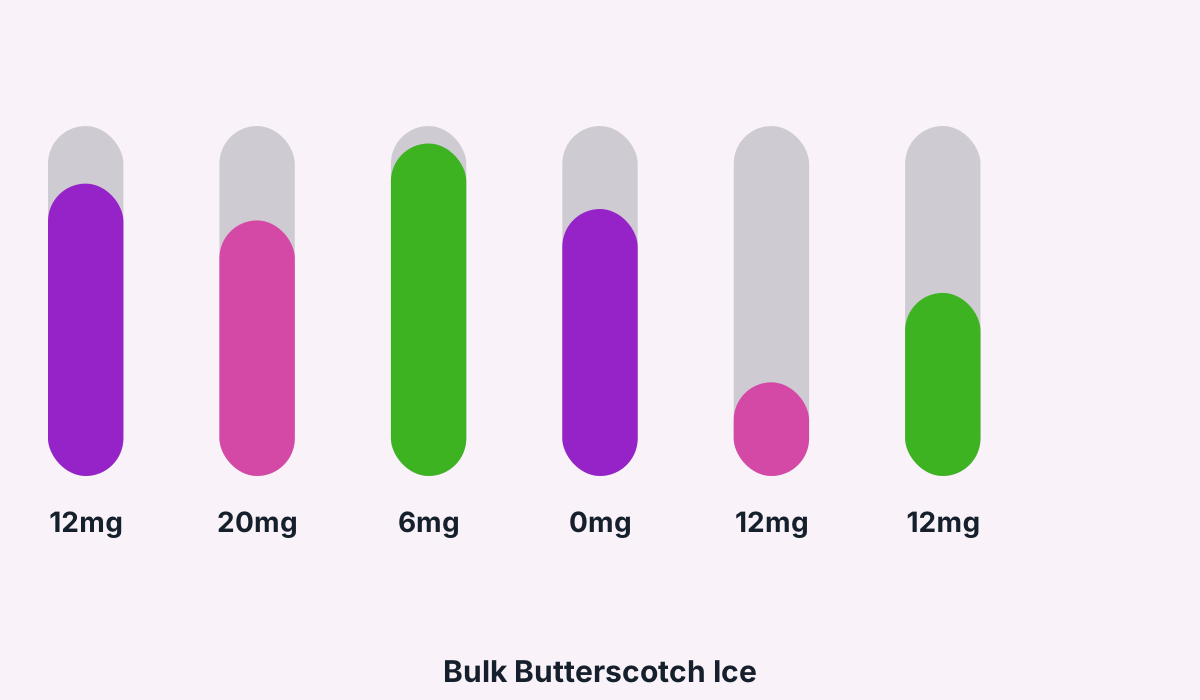
Pricing and Margin
Margin on butterscotch ice is rarely lost at the till. It is lost through dead stock, returns and emergency air freight. A slightly higher landed cost with predictable lead time usually beats the cheapest quote on the spreadsheet.
Tiered pricing works best when the tiers match real customer behaviour. Most butterscotch ice buyers will take the second tier if the step is modest and the third tier only if they can see a genuine reason to hold more stock.
Indicative reference points for planning purposes: entry tier from USD 1.88 per unit at 1000 units, mid tier at USD 1.65, and volume tier at USD 0.97 for full container quantities. These figures move with specification, packaging and freight, so treat them as a shape rather than a quote.
Inspection Before Dispatch
Keep a photo record of every butterscotch ice approval sample. Written descriptions age badly; a dated photograph next to a delivered unit settles most arguments in seconds.
Set the butterscotch ice complaint threshold in the contract before you need it. Deciding what counts as an acceptable defect rate during a dispute is the worst possible time to negotiate it.
- Ask how the factory measures puff count, then compare like with like.
- Rotate stock by batch code rather than by delivery date.
- Confirm the current customs classification with your own broker.
- Start with a mixed carton and let your own sell-through decide.
- Keep sealed retained samples from every production batch.
Freight, Customs and Timing
Model butterscotch ice freight both ways before choosing a method: cost per unit and cost per week of delay. The second figure is the one that decides whether a cheap option was actually cheap.

Merchandising and Listing Tips
Bundle butterscotch ice with a complementary item rather than discounting it outright. The perceived value holds up better and the second item often becomes a repeat purchase on its own.
Keep the butterscotch ice range tidy. A half empty shelf reads as a dying line, and customers interpret it that way faster than any signage can correct.
Where Demand Is Heading
Expect butterscotch ice packaging requirements to keep tightening. Designs that leave room for additional labelling age better than tight layouts that need a full reprint to comply.
Traceability is moving from a nice-to-have to a requirement in several butterscotch ice markets. Building the habit now is cheaper than retrofitting record keeping under pressure later.
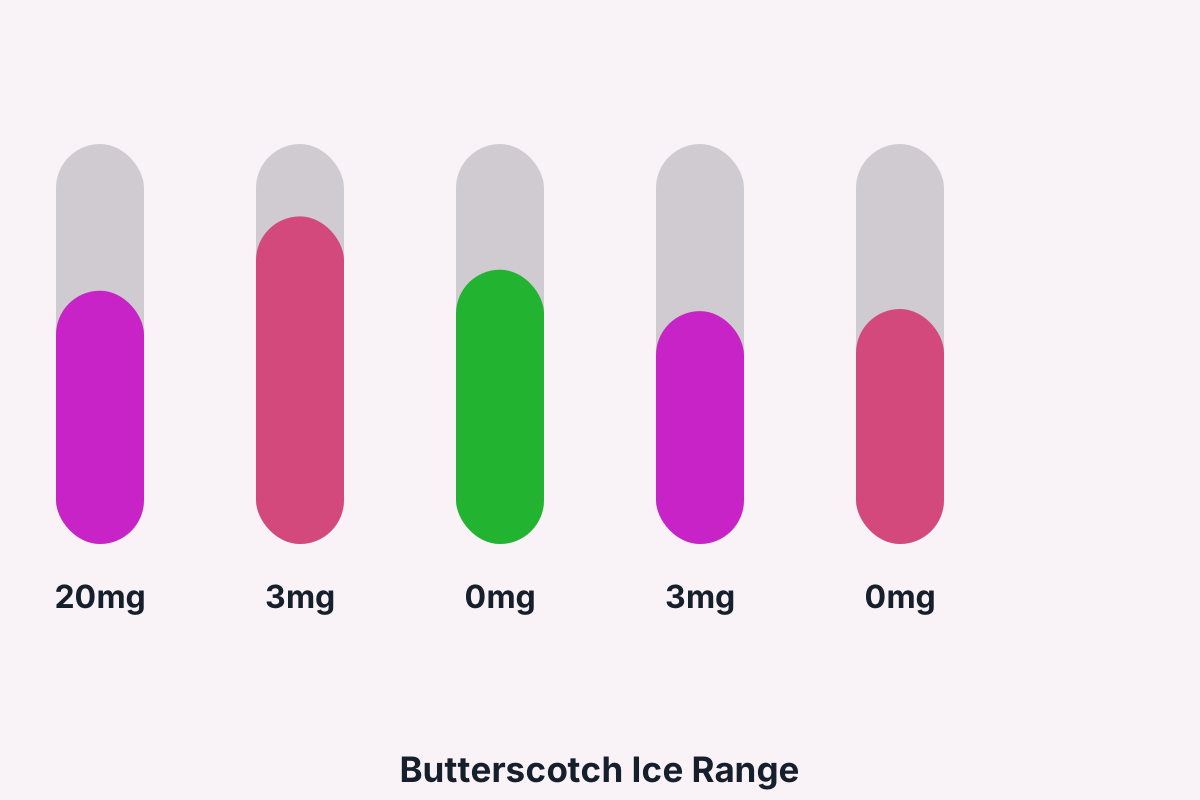
Reading a Butterscotch Ice Spec Sheet
Good butterscotch ice specs describe the failure boundaries, not just the target. Stating what is unacceptable gives the factory a clear production window instead of a single point they will miss half the time.
Ask any factory for the same butterscotch ice sample twice, three months apart. If the second sample drifts, the production line is running without statistical control and your reviews will drift with it. Consistency over time is a more useful signal than a single good sample.
| Product category | Accessory |
|---|---|
| Resistance band | 0.6 - 0.8 ohm |
| Capacity tolerance | +/- 3% |
| Puff count method | Machine cycle 2s on / 18s off |
| Master carton | 120 units |
| Carton weight | 6.2 kg |
| Shelf life | 12 months |
| Storage | 15-25 C, dry, away from direct light |
Practical Checklist
- Plan the switch from air to sea freight before you need it.
- Ask how the factory measures puff count, then compare like with like.
- Agree the tolerance band in writing before approving artwork.
- Confirm the current customs classification with your own broker.
- Keep sealed retained samples from every production batch.
- Start with a mixed carton and let your own sell-through decide.
Frequently Asked Questions
Do you hold stock for regular customers?
For established programmes we can reserve production slots and, in some cases, hold finished butterscotch ice stock against a forecast. It removes most of the lead time risk from a reorder and is worth discussing once volumes are stable.
Can I mix strengths in one order?
In most cases yes, as long as each strength meets the minimum run length. Mixed strength cartons are popular with retailers building their first display because they show the full ladder without over committing.
How are price changes handled on repeat orders?
{K} pricing is reviewed against input costs and volume rather than adjusted casually. Any change is confirmed in writing before the next order is scheduled, with the reason stated so you can judge it yourself.
What if a batch does not match the sample?
Keep the retained samples from the approval stage. If a delivered batch measurably differs, we compare against the retained set and resolve it against the production record. This is why we insist on sealed retained units from every run.
Next Step
If you take one thing from this page, take the retained sample habit. It costs a few units per batch and it is the difference between a disagreement and a decision.
Related Reading
- Butterscotch Ice Nicotine Strength Selection for Mixed Cabinets — Southeast Asia
- Butterscotch Ice Last Mile Delivery for Local Retailers — Established Chains
- Butterscotch Ice Clearance Strategies That Protect Margin — Mixed Cabinets
- Butterscotch Ice Counterfeit Risk and Serialisation — Real Numbers Only
- Butterscotch Ice Approval Workflow From Sample to Shipment — Cross-Border Trade
- Butterscotch Ice Counterfeit Risk and Serialisation — Southeast Asia