 VapeWholesaleHub
Butterscotch Ice Bundle Pricing That Moves Older Stock — Tight Margin Categories
Retailers rarely lose money on butterscotch ice because of price. They lose money because the first container was bought on a photograph. This page walks through what actually matters when you source butterscotch ice at scale, written from the buying desk rather than the marketing department.
How Butterscotch Ice Batches Are Checked
AQL sampling gets a lot of attention, but for butterscotch ice the more useful habit is simply measuring the same three things on every single batch. Trend lines catch problems that pass/fail checks miss.
The defect rate that matters is the one your customer experiences, not the one the factory reports. Bridge that gap by inspecting the way a customer would open the box, not the way a line worker packs it.
- Check carton dimensions against your freight quote before confirming.
- Ask how the factory measures puff count, then compare like with like.
- Plan the switch from air to sea freight before you need it.
- Start with a mixed carton and let your own sell-through decide.
- Confirm the current customs classification with your own broker.
Where Butterscotch Ice Sits in the Range
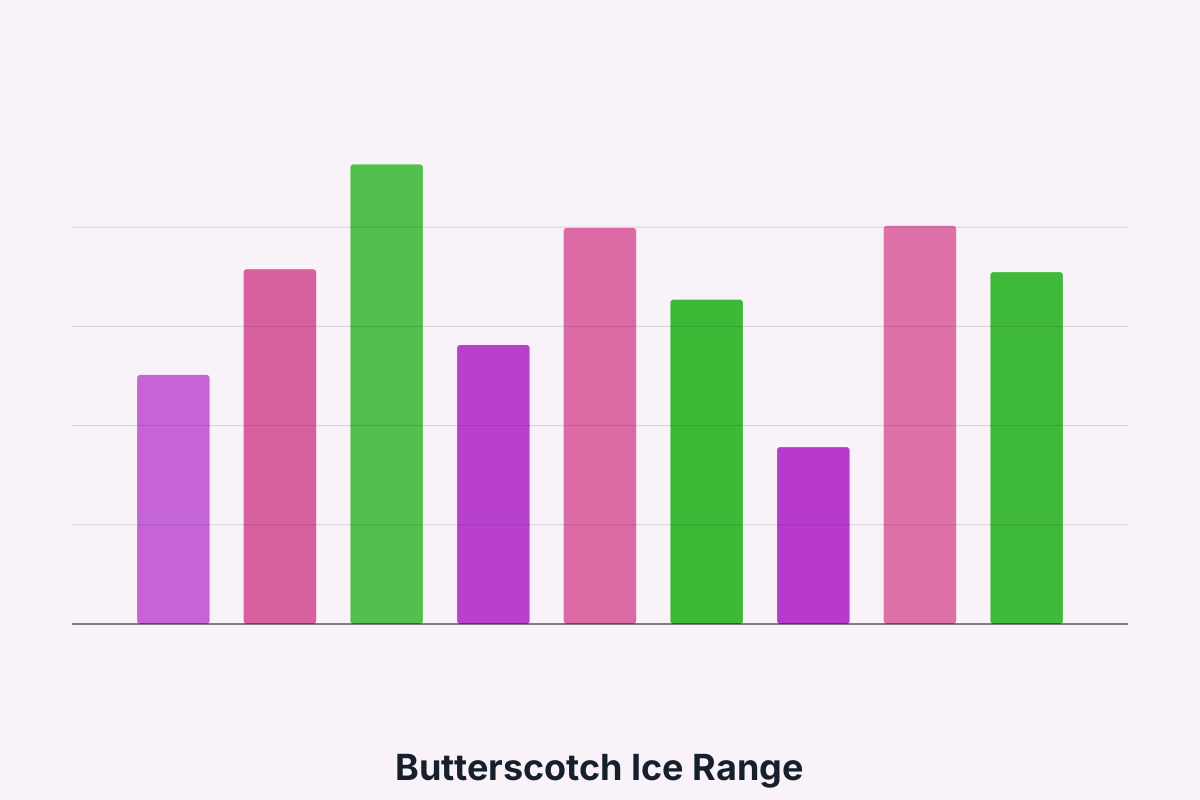
Category planning for butterscotch ice works best when you map it against three shopper types: the restocker who already knows what they want, the switcher who wants something stronger, and the explorer who buys on flavour name alone.
Butterscotch Ice sits at an interesting point in the assortment. It is familiar enough to be an impulse purchase and specific enough to build a repeat pattern around. Treating it as either pure commodity or pure specialty both lead to poor results.
Market Signals
Demand for butterscotch ice has been steadily rebalancing. The early phase rewarded whoever could ship fastest; the current phase rewards whoever can ship the same thing twice. That shift favours buyers who invest in specification rather than price shopping.
One shift worth planning for: shorter butterscotch ice reorder cycles with smaller average drops. It favours suppliers with flexible production slots over those who only want large annual commitments.
What to Fix Before Approving Butterscotch Ice
When we write a butterscotch ice specification with a distributor, we fix four things first: the resistance band, the liquid capacity tolerance, the puff count methodology and the packaging master carton. Everything else can flex without changing the customer experience.
A written butterscotch ice specification should be short enough to read in a minute and precise enough to argue about. If a factory cannot confirm a number in writing, assume the number is whatever is cheapest that week.
| Product category | Disposable |
|---|---|
| Resistance band | 0.8 - 1.0 ohm |
| Capacity tolerance | +/- 2% |
| Puff count method | Machine cycle 3s on / 27s off |
| Master carton | 200 units |
| Carton weight | 6.4 kg |
| Shelf life | 24 months |
| Storage | 15-25 C, dry, away from direct light |
Freight, Customs and Timing
Consolidating butterscotch ice with other lines is often the biggest single saving available to a mid size importer. The unit cost does not change but the landed cost does, sometimes materially.
Practical Checklist
- Model landed cost, not ex-works price, when comparing quotes.
- Keep sealed retained samples from every production batch.
- Plan the switch from air to sea freight before you need it.
- Agree the tolerance band in writing before approving artwork.
- Confirm the current customs classification with your own broker.
- Start with a mixed carton and let your own sell-through decide.
Frequently Asked Questions
Is there support for in-store material?
Yes. Shelf talkers, counter cards and simple planogram suggestions are available for butterscotch ice ranges that reach a sensible volume. Most retailers find the plain strength and flavour cards do the most work.
Can you match an existing product I already sell?
Often yes, provided we can measure it properly. Send a physical sample and we will report back on what can be matched, what will differ slightly, and why. An honest gap is more useful than a vague promise.
What if a batch does not match the sample?
Keep the retained samples from the approval stage. If a delivered batch measurably differs, we compare against the retained set and resolve it against the production record. This is why we insist on sealed retained units from every run.
Can I visit the production facility?
Yes, and we encourage it for larger programmes. Visits are most useful when you already have a draft specification, because you can then check the specific processes behind the numbers you care about.
Next Step
Nobody wins when a first order is too large to learn from. Start with a mixed carton, check how it moves in your own market, then scale the lines that earned the shelf space.
Related Reading
- Butterscotch Ice Forecasting Without Historical Data — Established Chains
- Butterscotch Ice Freight Forwarder Selection Notes — Small Batch Buyers
- Butterscotch Ice Escalation Path When Something Goes Wrong — Retail Chains
- Butterscotch Ice Cash Flow Planning for Large Buys — Wholesale Clubs
- Butterscotch Ice Growing From Pallet to Container — Container-Scale Orders
- Butterscotch Ice Reorder Discipline for Busy Distributors — High Volume Buyers